
Getting Knox County Court Records
Your first clue is the paperwork itself. Check the notice, citation, filing stamp, or docket result. That shows which court owns the file. Mike Hammond's Criminal Court Clerk office keeps Criminal, General Sessions Criminal, and Fourth Circuit records. Circuit and Civil Sessions files belong to Charlie D. Susano III's Circuit Court Clerk office. The Clerk and Master handles Chancery and Probate requests. Municipal clerks keep their own city matters, and Juvenile Court applies its own access rules.
When the file and scan are eligible, use the online product. Otherwise call the owning clerk, stop at its counter, or mail a request. Chancery and Probate documents can be arranged by mail, email, fax, or in person. A Knox County open-records request is another route to an existing, reasonably described public record. Tennessee Courts Public Case History covers appeals only. It cannot replace a Knox County trial file.
- Write down the court, case number, caption, record type, and date range.
- Check the proper clerk portal for an eligible scanned record.
- Call the clerk when no result appears or a date is urgent.
- Request inspection or copies at the counter, by mail, or on Form A.
- State whether the copy must be plain, certified, apostilled, or exemplified.
Knox Court Portals Have Limits
Knox County runs a free docket and a separate document store. Circuit posts an abbreviated calendar, while KnoxCircuit Records gives account-based access to documents. Criminal and Fourth Circuit use a different product. Neither system promises a scan of every filing, and sealed material never appears. Criminal coverage is described from November 1, 2017. For Circuit, the stated start is April 14, 2015. Civil Sessions begins October 4, 2017.
The official KnoxCircuit Records description lays out this split between the Knox County services. Its page shows the record service itself.
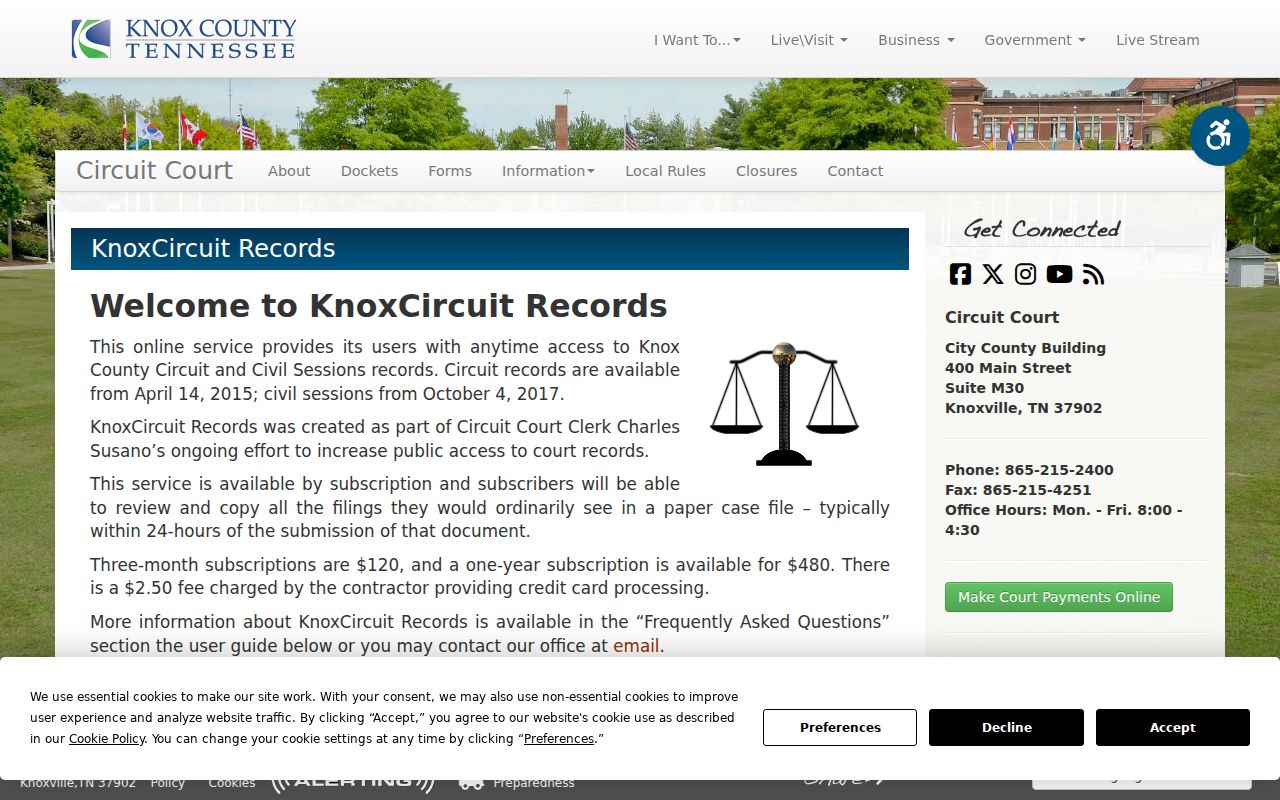
A calendar result can point you to a file. Official minutes and the clerk's record still control.
Knox County Court Record Types
A court file holds much more than its calendar row. Criminal files may include charging papers, motions, orders, plea or trial entries, and a disposition. In Circuit and Civil Sessions, expect complaints, answers, notices, motions, and judgments. Fourth Circuit handles domestic relations. Chancery and Probate keep equity and estate records. Adoption and other sealed material face strong limits, though.
- Docket sheets and calendars that list settings or events
- Pleadings, motions, notices, and filed responses
- Signed orders, judgments, and disposition records
- Public probate, Chancery, and domestic-relations documents
- Certified or authenticated copies issued by the owning clerk
Name the record you want. Asking for every case of a broad type rarely works. Knox County must provide existing public records the law covers, but it need not build a new report or compilation.
Describe a Knox Records Request
Form A gathers the basics. It asks for the office and Tennessee residency certification where required. It also asks for inspection or copies, a delivery choice, and a sound description of the record. Lead with the court and docket number. Then add the document type, timeframe, and a narrow keyword. Staff can then find a Knox County court record without building a new index.
The Knox County Public Records Request Form A is a documented route for this. Inspection may be free unless redaction is needed. Copies, delivery, and allowed labor can add cost. Chancery warns that a vague request may fail because it does not reasonably describe a specific record.
Best request: Name the court, docket number, document, and date range, then say whether inspection, an electronic copy, or certification is needed.
Inside a Knox Court Record
Think of the docket as a time-ordered index. The case file holds the documents tied to those events, when they are public and available. A portal can show an entry without its PDF, and a released copy may omit private fields through redaction.
| Case number | The clerk's stable identifier and strongest search key. |
|---|---|
| Caption and court | The public style plus the court and division. |
| Docket entries | Filed events, settings, orders, and status changes. |
| Pleadings | Available petitions, answers, notices, and motions. |
| Orders | Signed rulings or final action when public. |
The Circuit and Civil records search is one document route.
Search by docket number when possible, then confirm the item with the Circuit Clerk.
Criminal Record Scans Since 2017
The Criminal and Fourth Circuit product states a coverage date and clear limits. Not every filing is scanned. Sealed cases and filings stay unavailable, and a public copy can be redacted. An absent PDF does not prove that no filing exists.
The official online record terms spell out these limits. They apply to the Knox County criminal docket service.
Need an old file, a missing entry, or a certified copy? Give the Criminal Clerk the docket number.
Fees and Certified Copies
A plain copy just reproduces an available record. Certification adds the clerk's official seal, while apostille and exemplified copies are distinct forms of authentication, so ask the recipient which one it needs before paying.
| Knox County court record | Researched charge |
|---|---|
| Criminal hard copy | 50 cents per page |
| Criminal certification | $5 plus copy cost |
| Criminal electronic copy | No fee unless volume warrants one |
| Chancery regular copy | 50 cents per page |
| Chancery certified copy | $5 per document plus 50 cents per page |
| Apostille or exemplified copy | $15 per document plus 50 cents per page |
Chancery wants payment at request time. A mail order needs full payment and a prepaid return envelope, and since fees changed January 1, 2026, check the current Chancery fee notice.
Knox Archives and Microfilm
Recent and pending Chancery files live in an on-site vault. Older ones may sit at Knox County Archives or on microfilm, which makes staff-assisted access more useful than repeated online searches. Records Management stores and delivers county files, though it is not every court's clerk.
The Records Management page explains storage and how departments are routed.
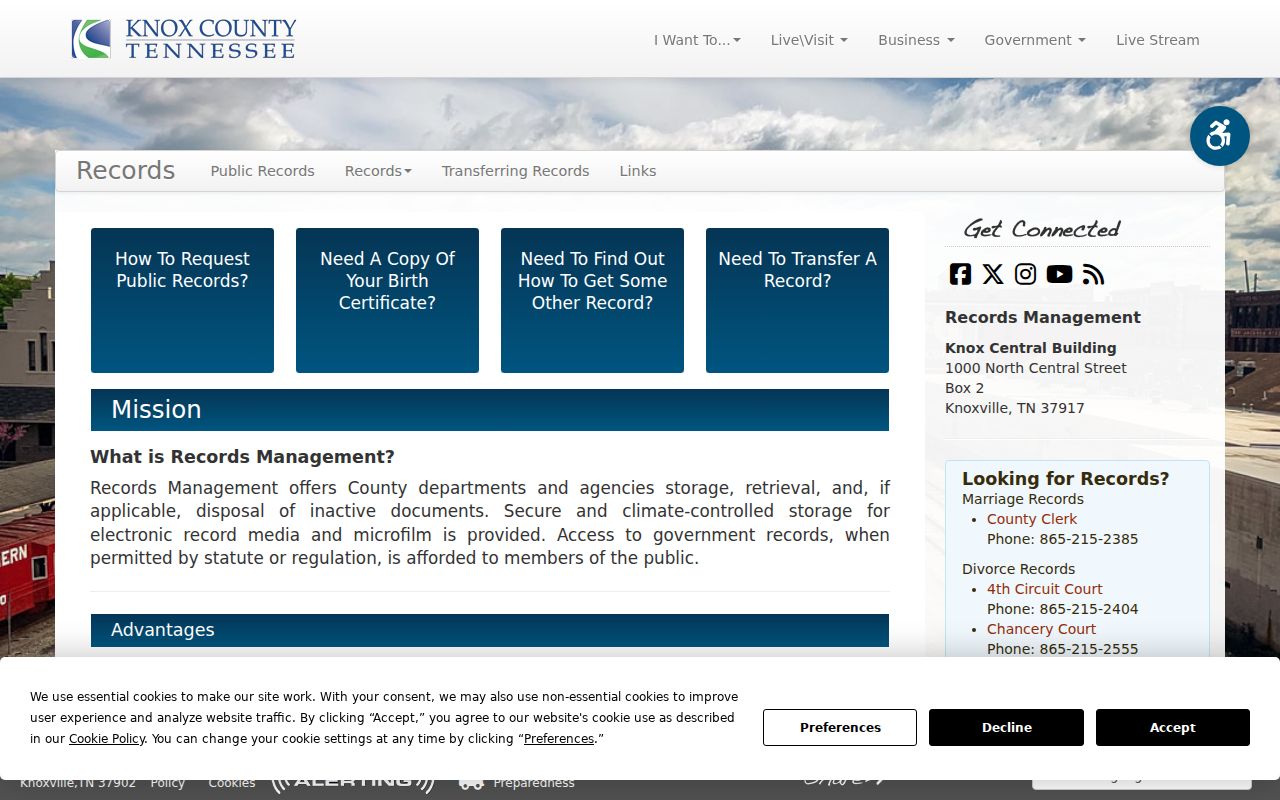
Divorce goes to Fourth Circuit, Chancery to its clerk, and criminal matters to the Criminal Clerk.
Sealed Records and Public Access
Tennessee Supreme Court Rule 34 recognizes access unless a statute, rule, order, or accepted exception applies. Knox clerks may redact confidential data. Juvenile files are generally private, adoption records are sealed, and the Clerk and Master cannot unseal a file without the required court process.
Access rule: Tennessee Supreme Court Rule 34 governs public access and exceptions. A docket row does not make each document public.
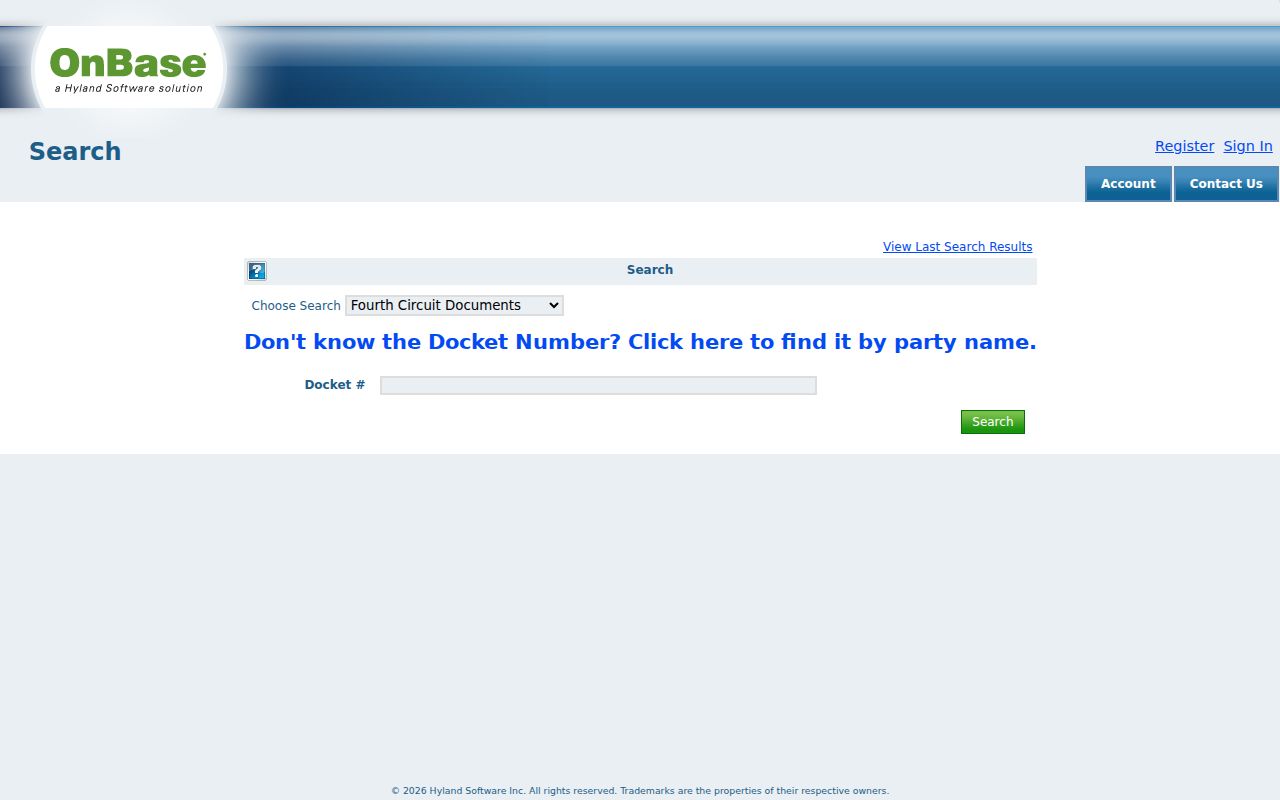
The Criminal and Fourth Circuit portal supplies one access route.
Ask whether a redacted copy can be released when the full file is restricted.
Knox County Clerk Contacts
Every Knox County clerk office sits in one place. It is the City-County Building at 400 Main Street, Knoxville, TN 37902. For a criminal docket question, the Criminal Clerk works out of Suite 149 and answers 865-215-2375. Circuit Court handles its docket from Suite M30, reachable at 865-215-2400. Fourth Circuit sits in Suite M15 at 865-215-2404. Civil Sessions is the exception. It operates from Room 318 of the Old Knox County Courthouse, and the phone is 865-215-2518.
Chancery and Probate Records
400 Main Street
Knoxville, TN 37902
Chancery 865-215-3015
Probate 865-215-4117
Chancery and Probate each take email requests for Knox County court records, using chancery.records@knoxcounty.org and probate.records@knoxcounty.org. Before you mail payment or share private details, confirm you have the right office.
Knox Inspection or Copy Choice
Not sure which pages you need? Inspection comes first. Reading the public part of a Knox County court record costs nothing. Doing that before buying copies can save real money. Once you know the exact order, pleading, or judgment, a copy request is the better fit. Pay for certification only when an official copy is truly required. A mailed Chancery request needs full payment plus a prepaid, self-addressed return envelope. Redaction adds both time and cost, so describe the filing as narrowly as you can. That small step cuts work for you and the clerk alike.